We do research in AI applied to NIR spectroscopy, physics-informed models, and non-linear optical methods to understand how light moves through complex matter, from biological tissues to agri-food systems. We are a spin-off of the Sensing Group of CEOT@UAlg.
What we do
We prototype methods that separate absorption vs. scattering, design spectral deep learning pipelines, and validate them on real-world sensing problems.
Discover how light encodes matter—and decode it responsibly with AI.
DeepLight Lab explores the intersection of applied non-linear optics (light in turbid media), spectroscopy (Vis–NIR), and artificial intelligence. Our mission is to craft non-destructive analysis and quality control methods while deepening understanding of light–matter interaction in complex media. Due to our background we have a special emphasis building chemometric models internal quality accessment of fruits, vegetables and other agri-food products. These same tools can also be used to study biological processes in detail (maturation, ripening, senescence, etc.).
Experiments and AI pipelines that respect living tissues and delicate products.
Optics, signal processing, biologists and machine learning teams working side by side.
Power-up NIR chemometrics with advanced modelling capabilities.
Designing neural networks for NIR data with explainability overlays and uncertainty-aware calibration.
Separating absorption from scattering in tissue, coupling physical priors to deep learning models.
Rapid, non-destructive sensing for quality control, disease detection, and nutritional profiling.
Building digital twins of spectrometers and physics-informed networks that explain their decisions.
What guides our roadmap.
Develop useful and reliable methods for spectral AI.
Release curated, open-access datasets for spectroscopy.
Translate advances into reliable tools for partners.
Train MSc, PhD, and post-docs on spectral AI and optics.
Selected recent highlights.
A github repository with some of the code we develop and publish
Exploring CNN architectures for dry matter prediction in fruit from multi-fruit near-infrared spectra
Explainability of CNN architectures for fruit dry matter predictions
A tutorial on automatic hyperparameter tuning of deep spectral modelling for regression and classification tasks
A Non-Destructive Approach to Assess Dehusking Efficiency Using Diffuse Reflectance Spectroscopy and Kubelka-Munk Theory
Estimation of soluble solids content and fruit temperature in'Rocha'pear using Vis-NIR spectroscopy and the SpectraNet-32 deep learning architecture
Follow the lab cadence.
Closing project
IG19145 - Artificial intelligence methods for spectral data processing to solve food fraud and authenticity issues (SensAIfood)
Funding
Preparing proposal for R&D Projects in All Scientific Domains 2025 on the subject of spectral datasets and interpretable AI.
Donations
We are accepting donations for a consumer grade high end GPU (RTX 5090 or RTX 6000 PRO) to power our research
Hands-on and interdisciplinary.
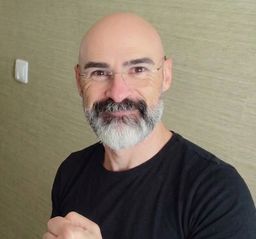 Dário Passos
Non-linear optics, deep learning for NIR spectral analysis, deep chemometrics.
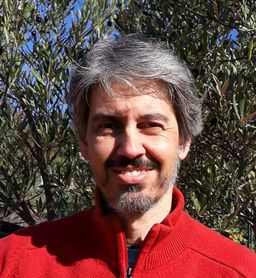 Rui Guerra
NIR Spectroscopy, linear and non-linear optics, signal processing, Chemometrics, hardware deployment.
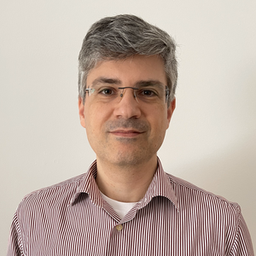 Jaime Martins
Data curation, deep learning, machine learning, benchmarking.
Past visitors and friends...
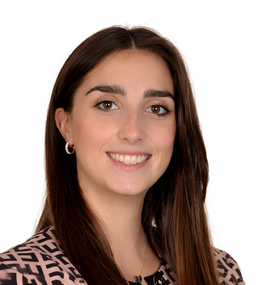
Irene Locatelli, University of Milan (IT),
Internship Jan-Apr 2026
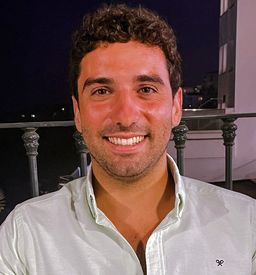
Jesus Galan, University of Cordoba (ES),
Internship Sep-Oct 2025
Support and collaborations that power the lab.
We would like to acknowledge the support from AMD University Program for the donation of hardware resources to our lab (1 AI PC, Minisforum X1 PRO), (February 2026).
Eur. ing. Fotis GeorgatosWe are very thankful to Eur. ing. Fotis Georgatos for the donation of SSDs for our storage needs (November 2025).